Hunting Simulator 3 game mechanics: Beginner Guide
Learn Hunting Simulator 3 game mechanics, from SimFauna wildlife and dog commands to weapons, tracking, gear, and demo limitations.
Hunting Simulator 3 Game Mechanics at a Glance
A clear shot starts long before you raise your weapon. Understanding Hunting Simulator 3 game mechanics helps you connect equipment choices, animal behavior, and dog commands instead of treating every encounter as a shooting challenge. This guide explains the confirmed Hunting Simulator 3 game mechanics and offers a practical learning plan without presenting untested strategies as proven rules.
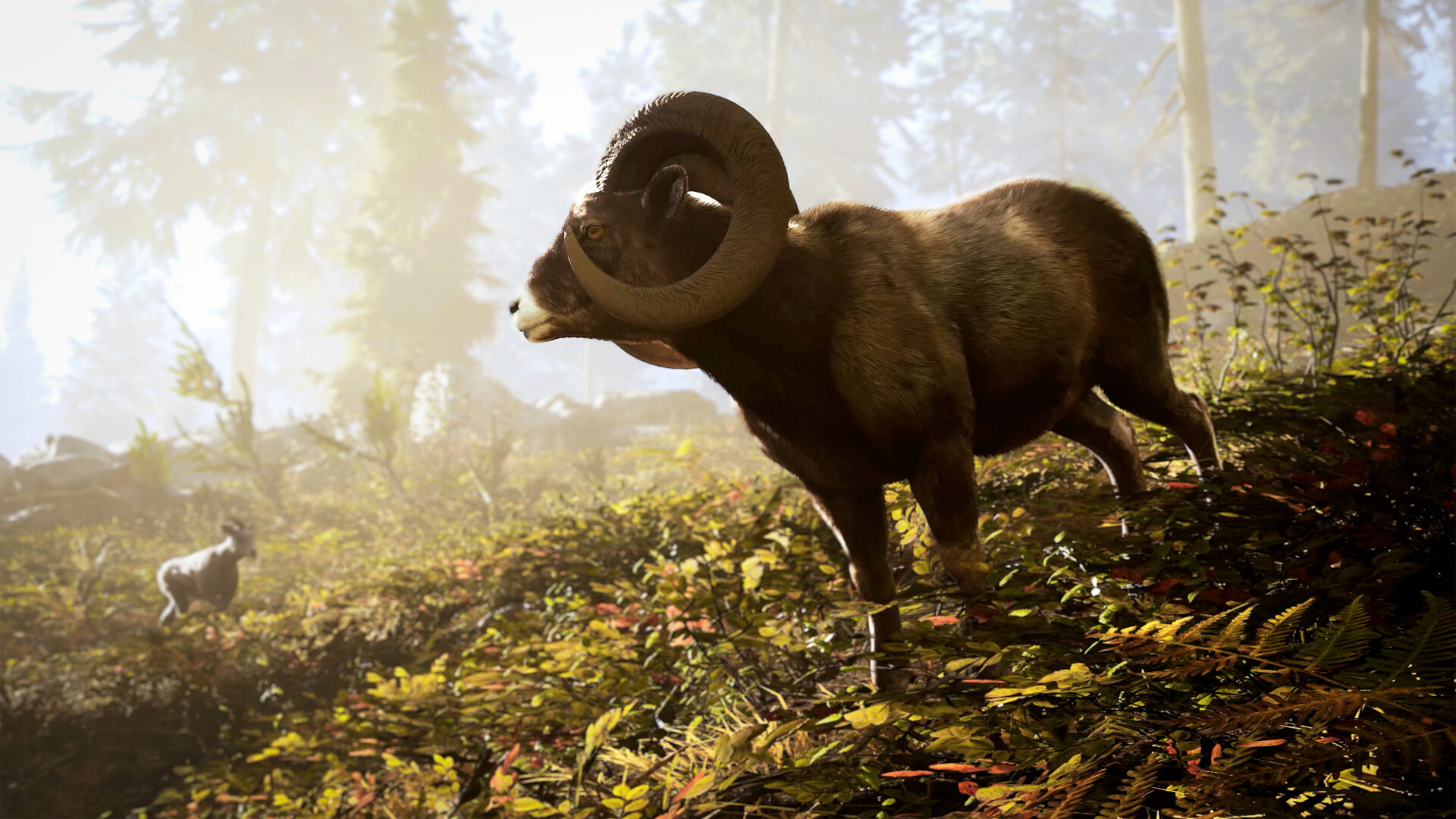
Official screenshot · Source: Steam store
As of October 26, 2026, the full game is scheduled to launch on October 29 for PC, PlayStation 5, and Xbox Series X|S. The details below come from official product information and developer announcements, rather than hands-on testing of the finished release.
The basic hunting loop connects preparation, exploration, tracking, positioning, and recovery. Your cabin supports preparation, the reserves provide encounters, and your dog helps you interpret and follow wildlife activity.
| System | Confirmed features | Beginner priority |
|---|---|---|
| Wildlife simulation | Animals react to players, age, and reproduce through SimFauna | Observe behavior before approaching |
| Exploration | Colorado and Texas environments; travel on foot or by vehicle | Learn one area before covering more ground |
| Weapons | Rifles, shotguns, bows, and crossbows | Practice with one weapon first |
| Hunting approaches | Pursuit, ambush, decoys, and lures | Choose a deliberate approach |
| Hunting dog | Track detection, trail following, and small-game retrieval | Learn the command wheel |
| Cabin and practice | Equipment purchases, modifications, trophy displays, and shooting activities | Prepare and practice between outings |
The official Hunting Simulator 3 Xbox listing describes these core systems. It does not provide every calculation behind detection, ballistics, or progression, so exact numerical claims require further documentation or testing.
SimFauna, Animal Behavior, and Exploring the Reserves
SimFauna is the wildlife simulation behind the game's changing ecosystems. According to the official description, individual animals respond to your actions, grow older, and can reproduce.
That makes wildlife more than a collection of stationary targets. However, the available information does not establish aging speed, reproduction intervals, population persistence rules, or an optimal trophy-management strategy. Avoid assuming that a herd-management method from another hunting game works here.
Observe Before Committing to an Approach
One useful way to learn Hunting Simulator 3 game mechanics is to separate observation from movement. Find an animal, watch its behavior, and then decide whether to approach or wait.
For an early outing, try this simple routine:
- Explore a manageable section of the reserve.
- Pause when you locate wildlife or signs of activity.
- Use your dog to help investigate tracks.
- Watch how animals respond as you change position.
- Adjust your approach instead of immediately chasing a departing target.
This is a learning method, not a guaranteed stealth formula. The sources confirm reactive wildlife but do not specify detection distances or exact noise thresholds.
Colorado, Texas, and Vehicle Travel
The full-game description names Colorado and Texas as hunting environments, each supporting dozens of wild species. It also confirms exploration on foot and with an all-terrain vehicle. The Steam demo specifically includes a Polaris UTV.
Use vehicle travel to familiarize yourself with the landscape, then switch to walking when you want to practice observation and tracking. This recommendation separates navigation practice from hunting practice; it is not evidence of a particular vehicle-spooking radius.
Dynamic weather and an environmental soundscape are also confirmed. What remains unclear is how individual weather conditions affect visibility, animal senses, or projectile behavior. Do not build an equipment plan around an undocumented weather bonus.
A productive first session has a modest goal: learn the terrain around one hunting area and complete a tracking sequence. Covering the whole reserve teaches less if you never stop to understand an encounter.
Weapons, Clothing, and Choosing Your Hunting Approach
Equipment selection is a central part of Hunting Simulator 3 game mechanics. The official arsenal includes rifles, shotguns, bows, and crossbows, with licensed brands such as Beretta, Winchester, and Browning.
The listing emphasizes realistic weapon sound and ballistics. It does not publish damage tables, ammunition restrictions, sight-adjustment values, or a best-weapon ranking.
| Equipment category | Confirmed information | Useful preparation |
|---|---|---|
| Rifles | Available within the licensed arsenal | Practice aiming and compare results at known distances |
| Shotguns | Available for hunting and relevant shooting activities | Learn how your chosen setup behaves on targets |
| Bows | Included as a hunting option | Practice before attempting a field shot |
| Crossbows | Included as a hunting option | Check handling and aiming at the range |
| Clothing | Individual garments affect the hunt | Read in-game descriptions before purchasing |
| Decoys and lures | Supported hunting tools | Check their intended use in the game |
Choose equipment by its in-game description, not just its brand. Licensed presentation does not tell you whether two items share the same practical role.
Clothing deserves the same attention. The official description says garments influence hunting, but it does not explain every attribute. Check the actual item information rather than assuming a garment provides camouflage, weather resistance, or a specific noise reduction.
Pursuit Versus Ambush
The game supports both pursuit and ambush hunting. Pursuit involves actively following your quarry; ambush centers on waiting for an opportunity, potentially using decoys or lures.
For learning purposes, give each outing a clear focus:
- Tracking practice: Follow signs with your dog and concentrate on maintaining the trail.
- Positioning practice: Watch wildlife and look for a less obstructed shooting angle.
- Ambush practice: Learn the instructions for an available lure or decoy before using it.
- Weapon practice: Return to the range when uncertain about your setup.
Avoid changing weapons, clothing, and hunting style simultaneously. Keeping most variables consistent makes it easier to understand why an attempt succeeded or failed.
The goal is a clean shot, not simply a quick shot. If your angle is poor or you are uncertain about the weapon, waiting is a better learning decision than firing to end the encounter.
Hunting Dogs, Commands, and Skill Development
Your dog connects several Hunting Simulator 3 game mechanics: finding tracks, following trails, and retrieving small game. Orders are issued through a command wheel, making the companion an active tool rather than a cosmetic follower.
The official description also confirms that dogs become more skilled as they accompany you on outings. It does not identify exact experience requirements, skill caps, or an optimal training sequence.
| Dog function | Officially described role | What to practice |
|---|---|---|
| Track detection | Helps locate animal tracks | Recognize the feedback after issuing a command |
| Trail following | Helps pursue wildlife trails | Follow the dog's response without rushing ahead |
| Small-game retrieval | Retrieves small game | Learn when and how the command becomes available |
| Skill development | Improves through accompanying hunts | Bring your companion consistently |
The demo offers a choice between a Retriever and a Hound. That confirms two available choices in the trial, but the supplied announcements do not give a detailed breed-stat comparison.
Do not assume that one is universally best or that a breed is incapable of a particular action without checking the game.
A Practical Command-Learning Routine
Start by opening the command wheel somewhere you can study it without pressure. Read the available orders, issue one, and watch the response before sending another.
Next, practice a short sequence: locate a sign, ask the dog to help, and follow the resulting behavior. When small-game retrieval is available, practice that separately.
This approach helps distinguish an unfamiliar command from a failed hunt. If you issue several orders rapidly, it becomes harder to tell which response belongs to which instruction.
Because improvement is tied to accompanying outings, regular use is the straightforward starting point. There is no confirmed shortcut or numerical training schedule in the available material.
Cabin Preparation, Shooting Practice, and Demo Limits
The customizable cabin serves as a preparation space. Officially described functions include buying and modifying equipment, displaying trophies, and taking a break between hunts.
Shooting-range activities and clay-pigeon shooting provide another way to learn Hunting Simulator 3 game mechanics without relying entirely on wildlife encounters. The listing describes timed target challenges with scoring and rankings.
Use those activities to answer practical questions: Can you aim consistently? Does a different weapon feel easier to handle? Are you comfortable enough with the setup to take it hunting?
A Beginner-Friendly Session Plan
| Step | Action | Purpose |
|---|---|---|
| 1 | Review your equipment and available hunting permissions | Establish what you can use and claim |
| 2 | Practice with your chosen weapon at the range | Learn handling before entering the field |
| 3 | Take your dog into a limited area | Reduce navigation distractions |
| 4 | Practice one tracking sequence | Learn commands and wildlife feedback |
| 5 | Attempt a shot only when comfortable | Prioritize control over speed |
| 6 | Review what happened before changing equipment | Make the next adjustment meaningful |
This plan is a suggested learning sequence, not a required mission order.
What the Steam Demo Includes
Developer announcements describe the demo as including the starting headquarters, shooting range, part of Colorado, the opening mission A Matter of Rabbits, a Retriever or Hound, and a Polaris UTV.
Demo progress is not saved, and hunts do not award in-game currency. Those restrictions should not be mistaken for a description of full-game progression.
The announcement identifies three licensed species that can be hunted and bagged. Other animals can appear and be hunted, but their licenses are unavailable in the demo. Encountering an animal therefore does not mean you can claim it.
An earlier announcement listed October 26 as the demo's end date; the latest supplied update extends availability until the October 29 launch.
Community reports: Some players describe movement as slow or criticize restarting the demo. These are player experiences, not confirmed movement measurements or proof that the full game lacks saving.
FAQ: Hunting Simulator 3 Game Mechanics
What are the main Hunting Simulator 3 game mechanics?
The main systems include SimFauna wildlife behavior, open-world exploration, weapon and clothing selection, pursuit and ambush hunting, dog commands, and cabin preparation. Range challenges provide additional practice. Exact detection formulas, progression rates, and weapon statistics are not established by the supplied official descriptions.
Do hunting dogs improve over time?
Yes. Official information says dogs become more skilled as they accompany you on outings. They help identify tracks, follow trails, and retrieve small game through command-wheel orders. Exact training thresholds and breed-specific statistics are not provided.
Does the Hunting Simulator 3 demo save progress?
No. The developer's demo announcement states that progress is not saved and hunts do not award in-game currency. Treat the demo as a place to learn controls, explore part of Colorado, and test hunting systems—not as a progression grind.
Is Hunting Simulator 3 multiplayer?
The Xbox listing identifies the game as single-player. The supplied official material does not establish a cooperative hunting mode. Shooting-challenge rankings should not be confused with multiplayer exploration or shared hunts.
Related Guides
Hunting Simulator 3 system requirements: PC Guide
Check Hunting Simulator 3 minimum and recommended PC specs, RAM, graphics cards, storage, and demo availability before launch.
Hunting Simulator 3 tips: Beginner Hunting Guide
Learn essential Hunting Simulator 3 tips for licenses, tracking, gear, dogs, and settings, plus the demo limits to know before your first hunt.
Hunting Simulator 3 trophy list: Status and Guide
Check the Hunting Simulator 3 trophy list verification status, understand Gold animal ratings, and prepare a reliable achievement checklist.
Hunting Simulator 3 early access: Demo & Release Guide
Hunting Simulator 3 early access explained: Steam demo availability, October 29 release, platforms, PC specs, and what preview gameplay reveals.
Hunting Simulator 3 PC: Release, Specs & Steam Guide
Get Hunting Simulator 3 PC release details, system requirements, Steam demo availability, controller support, and practical hunting tips.