Hunting Simulator 3 Texas Map: All 18 Animals
Explore the Hunting Simulator 3 Texas map animal list, standout species, demo availability, and practical ways to plan your first hunts.
Hunting Simulator 3 Texas Map: What to Know First
The Hunting Simulator 3 Texas map brings together 18 animal species, from desert bighorn sheep to bufflehead ducks. That variety matters because your wildlife checklist extends well beyond deer, giving you several different hunting interests to plan around. If you’re researching the Hunting Simulator 3 Texas map before launch, the most useful starting point is knowing which animals are announced—and which details still need verification.
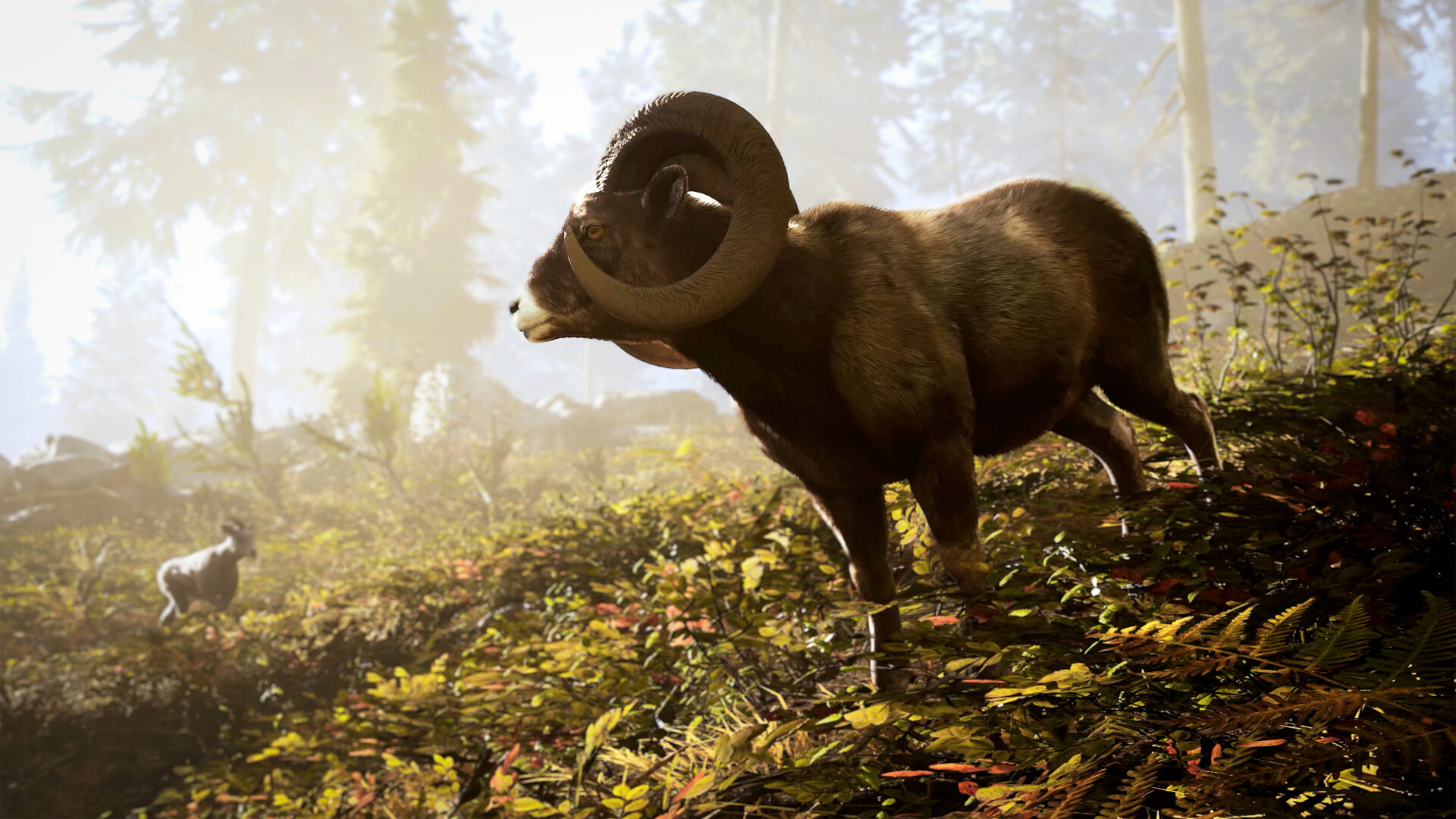
Official screenshot · Source: Steam store
As of October 26, 2026, Hunting Simulator 3 is scheduled to launch on October 29, 2026, for PC, PlayStation 5, and Xbox Series X|S. This is a prelaunch wildlife guide, not a tested hotspot walkthrough.
The official Texas animal announcement on Steam confirms the reserve’s 18-species total. Community reports provide a spoken walkthrough of the full roster, including names shown in the reveal’s animal images.
| Key question | What the available material establishes |
|---|---|
| How many animal species are in Texas? | 18, according to the official announcement |
| Is Texas a base-game map? | Community reports identify Texas and Colorado as the two launch maps |
| Can you explore Texas in the demo? | The announced demo covers a restricted area of Colorado, not Texas |
| Are exact animal hotspots documented here? | No verified Texas coordinates or reliable spawn routes are available in these sources |
| When is the full game scheduled to launch? | October 29, 2026 |
The important distinction is between an announced species roster and a proven hunting route. Knowing an animal appears in Texas does not establish where it spawns, when it moves, or what equipment the game requires.
Complete Texas Animal List: All 18 Species
The Hunting Simulator 3 Texas map combines deer, horned mammals, predators, small game, and five bird species. The following checklist consolidates the official announcement with community reports interpreting the animal reveal.
The groupings below are for easy browsing. They are not official weapon classes, license categories, or difficulty ratings.
| # | Animal | Broad wildlife group | Identification cue |
|---|---|---|---|
| 1 | American pronghorn | Hoofed mammal | Pronged horns and contrasting body markings |
| 2 | Collared peccary | Peccary | Pale collar around the shoulder area |
| 3 | Aoudad | Wild sheep | Shaggy throat and chest hair with backward-curving horns |
| 4 | Texas bobcat | Predator | Short tail and feline profile |
| 5 | Texas plains coyote | Predator | Canine outline with a bushy tail |
| 6 | Nilgai | Antelope | Large body; males have relatively short horns |
| 7 | Scimitar-horned oryx | Antelope | Long, backward-sweeping horns |
| 8 | Desert bighorn sheep | Wild sheep | Heavy, curled horns on mature males |
| 9 | Black-tailed prairie dog | Small mammal | Compact body and dark-tipped tail |
| 10 | Desert cottontail | Small mammal | Rabbit shape and pale, cotton-like tail |
| 11 | Rio Grande turkey | Bird | Large ground bird with a broad tail |
| 12 | Pheasant | Bird | Long-tailed game-bird silhouette |
| 13 | Montezuma quail | Bird | Small, rounded game-bird profile |
| 14 | Texas white-tail deer | Deer | White underside of the tail |
| 15 | Feral pig | Wild pig | Stocky body and elongated snout |
| 16 | Desert mule deer | Deer | Prominent ears |
| 17 | Northern pintail | Waterfowl | Slender duck profile; breeding males have elongated tail feathers |
| 18 | Bufflehead | Waterfowl | Compact duck with a rounded head |
These identification notes describe general wildlife characteristics, not guaranteed visibility at every distance or in every in-game model.
Keep peccaries and feral pigs separate
The collared peccary, commonly called a javelina, and the feral pig are separate entries. Although both have pig-like silhouettes, peccaries belong to a different family from true pigs.
For your checklist, that means two distinct sightings or hunting goals—not interchangeable names for one animal. Confirm the species through the game’s identification tools rather than relying on a quick silhouette.
Do not add species based on passing mentions
The community transcript briefly mentions addax while discussing unfamiliar animals, but it does not present addax as a separate entry in its 18-animal walkthrough. Counting every animal name spoken in commentary would therefore produce a misleading roster.
Likewise, the speaker expresses uncertainty about some bird models. Those observations should not be treated as verified information about sex identification or game behavior.
Which Texas Animals Should You Prioritize?
The best first target on the Hunting Simulator 3 Texas map depends on what you want to learn. A deer-focused player may start with familiar silhouettes, while a wildlife collector may be more interested in nilgai or scimitar-horned oryx.
These are suggested priorities based on the announced roster—not rankings of spawn frequency, trophy value, or hunting difficulty.
| Your main interest | Suggested animals to prioritize | Why they deserve attention |
|---|---|---|
| Deer hunting | Texas white-tail deer, desert mule deer | Two distinct deer entries to identify and compare |
| Horned animals | American pronghorn, aoudad, desert bighorn sheep | Noticeably different horn shapes |
| Unfamiliar antelope | Nilgai, scimitar-horned oryx | Distinctive additions beyond the deer roster |
| Predator tracking | Texas bobcat, Texas plains coyote | Both feline and canine predators are represented |
| Small-game observation | Black-tailed prairie dog, desert cottontail | Smaller wildlife adds another identification challenge |
| Bird hunting | Turkey, pheasant, quail, pintail, bufflehead | Five announced bird species to work through |
Start with a manageable checklist
Instead of trying to find all 18 species immediately, choose three contrasting animals. For example:
- Texas white-tail deer for a familiar deer profile.
- Scimitar-horned oryx for a distinctive horned animal.
- Rio Grande turkey for a bird-focused objective.
This creates a varied first-session checklist without assuming those animals share a location. Once you have confirmed sightings, expand your goals using what you actually observe.
Give the birds their own session
Birds account for 5 of the 18 announced species, or about 28% of the Texas roster. That is enough variety to justify a dedicated bird checklist rather than treating them as incidental sightings.
The roster includes turkey, pheasant, and quail alongside two waterfowl species. However, the announcement does not establish feeding schedules, landing sites, flight patterns, or caller effectiveness. Treat those as questions to investigate after launch, not facts to build a route around.
How to Prepare for Your First Texas Hunts
A useful Hunting Simulator 3 Texas map plan should remain flexible until you can inspect the full game’s equipment, licenses, and reserve information. The sources establish which wildlife to expect, but they do not provide verified caliber requirements or a tested Texas loadout.
Start with the game’s own requirements, then refine your approach through observation.
| Step | Action | What it helps you avoid |
|---|---|---|
| 1 | Pick one primary target species | Wandering without a clear objective |
| 2 | Check its in-game hunting requirements | Assuming one loadout suits every animal |
| 3 | Practice with your chosen equipment | Learning unfamiliar controls during an encounter |
| 4 | Identify wildlife before taking a shot | Confusing similar-looking species |
| 5 | Record confirmed encounters | Depending on unverified hotspot claims |
| 6 | Revisit promising areas and compare results | Treating one sighting as proof of a reliable spawn |
Use the Colorado demo for controls, not Texas locations
The official demo description includes the starting headquarters, a shooting range, a restricted part of Colorado, dog-assisted tracking, and a Polaris UTV. Those features offer opportunities to become familiar with the game before release.
Practical preparation could include:
- Testing aiming sensitivity and equipment handling at the range.
- Learning how tracking information appears on screen.
- Practicing movement and observation controls.
- Trying the available Retriever or Hound.
- Getting comfortable with vehicle controls.
However, Colorado demo observations do not establish Texas wildlife behavior. A productive location in one reserve says nothing about a Texas spawn point.
The demo also does not save progress or award in-game currency from hunts, according to its announcement. Use it as practice rather than as a way to build launch-day resources.
Make an encounter log
Once Texas becomes available, a short encounter log can be more useful than an early “best spot” claim. Record the species, map location, displayed time if available, and what you observed.
Separate a sighting from a pattern. Finding a coyote once establishes that encounter; repeated observations are needed before calling the area dependable.
For the Hunting Simulator 3 Texas map, that distinction will help you build routes grounded in your own sessions rather than speculation.
Texas Versus Colorado: What Is Actually Known?
Community reports describe Texas and Colorado as the two base-game launch maps, with 18 species in Texas and 19 in Colorado. The Texas figure is independently confirmed by the official wildlife announcement; the Colorado count here comes from community coverage.
Those numbers should not be added together and presented as a count of unique animals. Community reports identify at least some overlap, including desert cottontail.
| Comparison | Texas | Colorado |
|---|---|---|
| Reported species total | 18; officially confirmed | 19; community-reported in the supplied coverage |
| Featured in the announced Steam demo | No | Yes, in a restricted area |
| Role in community coverage | Second base-game launch map | Other base-game launch map |
| Verified hotspot information in these sources | Not supplied | Not supplied |
| Useful prelaunch takeaway | Study the announced wildlife roster | Use the demo to practice controls |
The Hunting Simulator 3 Texas map stands out for its combination of desert-associated wildlife, deer, predators, and birds. Nilgai and scimitar-horned oryx also give players distinctive animals to seek beyond familiar North American deer species.
What remains unverified in the supplied material includes:
- Exact reserve size and named subregions.
- Animal population density.
- Reliable species-specific coordinates.
- Need-zone or activity schedules.
- Trophy scoring details.
- Texas-specific weapon and ammunition requirements.
A missing detail is not evidence that a feature is absent. It simply means the available announcements do not establish it. For now, the strongest preparation is learning the roster and choosing a few clear wildlife goals.
FAQ: Hunting Simulator 3 Texas Map
How many animals are on the Hunting Simulator 3 Texas map?
The Texas reserve has 18 announced animal species. Its roster includes deer, antelope, wild sheep, predators, small mammals, and five bird species. That number describes species variety, not the total number of individual animals roaming the reserve.
Is Texas included in the base game?
Community reports identify Texas and Colorado as the two base-game maps at launch. The official Texas wildlife announcement confirms the reserve and its 18-species roster. The full game is scheduled to release on October 29, 2026.
Can you play Texas in the Hunting Simulator 3 demo?
The announced Steam demo lets players explore a restricted portion of Colorado, not Texas. It also includes the headquarters, shooting range, tracking dogs, and a UTV. The latest supplied official update says the demo remains available until the full game launches.
Where are the best Texas hunting spots?
The supplied sources do not establish reliable hotspots or exact animal coordinates. Start by confirming your target species and its in-game requirements, then log encounters as you explore. Repeated sightings provide a better foundation for a hunting route than an untested location claim.
Related Guides
Hunting Simulator 3 animal list: Texas & Colorado
Explore 18 reported Texas animals, officially revealed Colorado wildlife, and species-count caveats in this Hunting Simulator 3 animal list.
Hunting Simulator 3 dogs: Breeds, Baying, and Tracking
Compare Hunting Simulator 3 dogs, learn how hound baying and tracking work, and check breed bonuses, demo tips, and prelaunch limitations.
Hunting Simulator 3 maps: Colorado Exploration Guide
Explore Hunting Simulator 3 maps with confirmed Colorado details, demo limits, vehicle information, and practical wildlife scouting tips.
Hunting Simulator 3 cancelled? Release Status Explained
Is Hunting Simulator 3 cancelled? Official listings show an October 29, 2026 release. Get the latest on platforms, the demo, pricing, and PC specs.
Hunting Simulator 3 crossplay: PS5, Xbox, and PC Status
Is Hunting Simulator 3 crossplay confirmed? Get the latest PS5, Xbox, and PC details, plus what Steam says about multiplayer and saves.