Hunting Simulator 3 simfauna: Wildlife Explained
Learn how Hunting Simulator 3 SimFauna handles animal aging, DNA, herd leaders, and predators, plus practical tips for planning your hunts.
Why SimFauna Changes Your Hunting Decisions
The biggest animal in sight might not be the smartest one to shoot. The Hunting Simulator 3 simfauna system makes that decision matter by connecting animal behavior, aging, genetics, and predator encounters. Understanding Hunting Simulator 3 simfauna means thinking beyond your next trophy and considering what your choices could mean for future hunts.
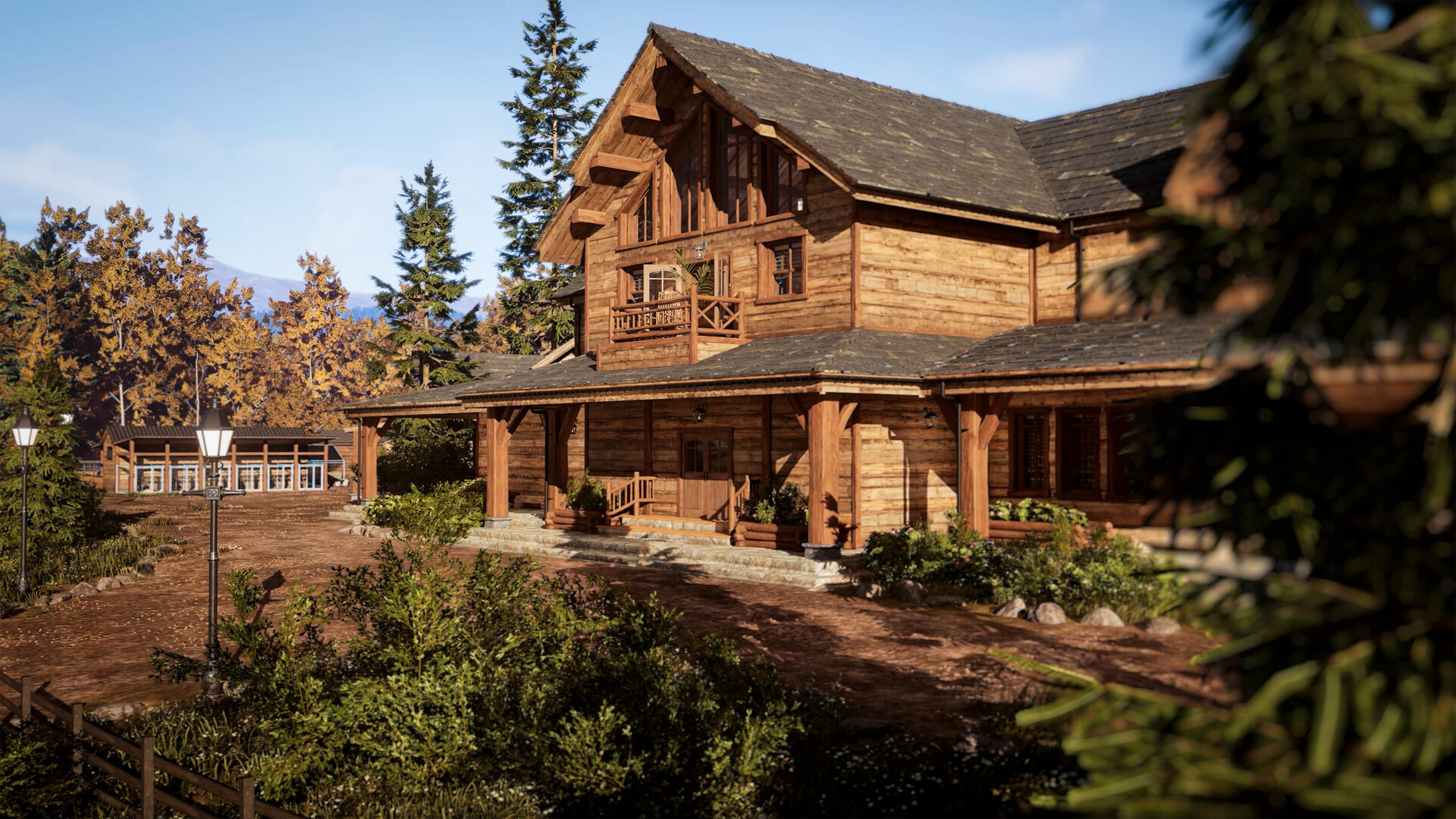
Official screenshot · Source: Steam store
Instead of treating wildlife as moving targets, developer Nacon Studio Ghent describes a simulation built around individual animals and their biological needs. Animals eat, drink, rest, age, and respond to their surroundings, while your hunting decisions can influence the ecosystem.
As of October 26, 2026, the full game is scheduled for October 29. This guide explains the officially described mechanics and offers practical approaches based on them—not tested strategies or claims about unannounced systems.
How Hunting Simulator 3 simfauna Works
SimFauna is the game's wildlife simulation system. Its stated purpose is to model an ecosystem at a broad level while giving individual animals distinct traits, routines, and life stages.
The important distinction is that animal behavior is described as needs-driven rather than arbitrary. A deer heading toward water or an animal settling down to rest is responding to biological priorities. Learning those priorities should help you understand encounters rather than simply react to them.
The official Hunting Simulator 3 Steam listing confirms that animals age, respond to player actions, and exhibit lifelike behavior through SimFauna. Nacon's product description also confirms reproduction.
| SimFauna feature | Officially described behavior | Why it matters to hunters |
|---|---|---|
| Life stages | Animals include juveniles, adults, and older specimens | Individuals differ by age as well as appearance |
| Biological needs | Feeding, drinking, and resting guide behavior | Observation can reveal useful routines |
| Individual genetics | Each animal has a DNA score that influences traits | Target selection can have longer-term consequences |
| Herd leadership | Strong genetics can determine leaders in some species | Removing a leader can trigger succession |
| Predator interactions | Predators stalk prey or coordinate hunts | Other animals can change the situation around you |
Observe behavior before assuming a schedule
Needs-driven behavior does not automatically mean every species follows a fixed timetable. The available material does not establish exact feeding hours, drinking windows, or guaranteed routes.
A useful starting approach is to watch what animals actually do:
- Note where you see feeding, drinking, and resting.
- Observe whether nearby animals share the same activity.
- Watch for environmental disturbances before approaching.
- Return to promising areas to see whether a pattern repeats.
These are observation habits, not confirmed spawn-farming methods. A single sighting tells you where an animal was; repeated observations give you better evidence about its routine.
Colorado and Texas provide the setting
The announced hunting environments include Colorado and Texas, with dozens of wild species described for each. You can explore on foot or use an all-terrain vehicle.
For learning wildlife behavior, consider spending time in one manageable area before ranging across the map. Familiarity makes changes easier to notice, whether that means a different age mix in a group or predators appearing near animals you were tracking.
That is a practical learning strategy, not evidence of a hidden territory or population-management mechanic.
Animal Aging, DNA, and Selective Hunting
The most consequential part of Hunting Simulator 3 simfauna is the connection between individual animals and future generations. Animals are described as aging over time and reproducing, while their DNA scores influence traits.
The developer's clearest example involves white-tailed deer: selectively removing individuals with weaker genetics, illustrated by smaller antlers, can help produce larger-antlered animals in later generations.
That creates a different question from ordinary trophy hunting. Instead of asking only, “Which animal gives me the best trophy now?” you may also ask, “Which animal should I leave alive?”
Age and genetics need separate consideration
The announced life stages include juveniles, adults, and older animals, each with its own characteristics and routines. Genetics is another layer, not simply a synonym for age.
The explanation does not provide enough detail to turn visible antler size into a universal DNA calculator. In particular, it does not establish that every small-antlered animal should be removed regardless of its age.
| What you observe | What it can help you assess | What you should not automatically assume |
|---|---|---|
| A juvenile animal | Its place in the life cycle | That its current appearance reveals its final potential |
| An adult with smaller antlers | A possible candidate for closer evaluation | That antler size alone proves its exact DNA score |
| A large-antlered deer | Its immediate trophy appeal | That taking it is best for future generations |
| An older specimen | Its age-related characteristics and behavior | That older always means genetically weaker |
| A herd leader | A possible leadership role linked to genetics | That every species uses the same leadership rules |
Use selective hunting as a long-term approach
A cautious strategy is to build context before deciding which animals to harvest. Watch several individuals, consider their apparent life stages, and use whatever identification information the game actually provides.
For example, imagine observing two adult white-tailed deer, one with noticeably smaller antlers. The developer's explanation suggests that removing the weaker-genetics individual can support better traits in later generations. However, the available sources do not reveal the inheritance formula, the number of generations required, or the size of any improvement.
Do not expect an immediate trophy upgrade after one harvest. The mechanic is described in generational terms, not as an instant replacement system.
What remains unconfirmed
For Hunting Simulator 3 simfauna, several details still require clarification or testing:
- How quickly animals progress through each life stage.
- Whether DNA scores are directly visible to players.
- How offspring inherit traits from their parents.
- How reproduction timing works.
- Whether population or genetics information appears in a dedicated interface.
Those gaps matter. Without them, precise “optimal culling” charts would be speculation rather than reliable advice.
The genetics system is also a game mechanic, not a substitute for real-world wildlife-management guidance.
Herd Leaders, Predators, and Changing Encounters
Hunting Simulator 3 simfauna connects genetics to group behavior in some species. According to the developer, a strongly endowed animal can become the herd leader. If that leader is killed, the animal with the next-best DNA takes over.
The qualification “in some species” is important. The explanation does not establish one universal hierarchy for every herd, pack, or animal group.
Think before removing a leader
A leader may be an appealing target, but harvesting it also removes an animal associated with strong genetics. That creates a potential trade-off between an immediate hunting opportunity and your longer-term selection goals.
Leadership succession is confirmed; broader consequences are not. There is no basis in the supplied material for claiming that killing a leader automatically scatters the group, collapses its population, or permanently changes its territory.
| Encounter | Confirmed mechanic or example | Practical response |
|---|---|---|
| A leader in an applicable species | Leadership can be associated with strong DNA | Consider your longer-term goals before shooting |
| A leader is harvested | The next-best-DNA animal takes over | Reassess the group rather than assuming it has no leader |
| A bobcat approaches prey | Predators can stalk other animals | Watch both predator and prey before moving |
| Wolves hunt together | Coordinated pack hunting is described | Scan beyond the first animal you notice |
| Predators or big game notice you | Their attention may shift toward the player | Stay alert instead of treating the encounter as harmless scenery |
Predator encounters are not just background activity
The developer gives two concrete examples: a bobcat stalking prey and wolves coordinating a hunt. These interactions mean the animal you are tracking may already be involved in another encounter.
Before committing to an approach, look beyond your intended target. Nearby predators could make the situation less predictable, and the developer warns that predators and big game may turn their attention toward you.
However, that warning does not establish exact aggression ranges, attack probabilities, or guaranteed defensive tactics. Treat awareness as useful preparation, not a promise that one approach will always keep you safe.
A Practical Plan for Your First Hunts
The best early approach to Hunting Simulator 3 simfauna is to learn before optimizing. You do not need a complete genetics model to start making more deliberate decisions.
Use your first outings to connect visible behavior with the systems the developer has described.
| Step | What to do | What you gain |
|---|---|---|
| 1. Choose a limited observation area | Spend time studying one part of the map | A manageable baseline for later comparisons |
| 2. Watch before approaching | Identify feeding, drinking, resting, or alert behavior | Context for the animal's movement |
| 3. Compare individuals | Look at apparent age, visible traits, and group roles | A more informed target choice |
| 4. Check the surroundings | Look for predators and additional big game | Better awareness of a changing encounter |
| 5. Make a deliberate harvest decision | Decide whether your goal is an immediate trophy or selective hunting | A clear reason for taking or passing on an animal |
| 6. Revisit and observe | Compare later sightings with earlier notes | Evidence of changes without assuming their cause |
Let your dog support tracking
Your hunting dog is officially described as helping locate tracks, follow trails, and retrieve small game. A command wheel lets you issue orders.
Use those tracking abilities alongside direct observation. A trail can help you locate wildlife, while watching the animal helps you interpret its behavior.
There is no confirmed basis for claiming your dog can identify DNA scores, predict future antler growth, or choose genetically weaker animals. Keep its documented tracking role separate from the genetics system.
Keep simple notes instead of chasing formulas
A short hunting log can make your observations more useful. Record the location, species, apparent age, activity, group composition, and any predator encounter.
If you revisit an area and see different animals, avoid immediately attributing the change to your last harvest. Movement, aging, reproduction, and other ecosystem activity may all complicate that interpretation.
As of October 26, the latest Steam announcement says the demo remains available until the October 29 launch. It offers a chance to explore Colorado, but the supplied material does not establish whether the demo exposes every SimFauna mechanic or carries progress into the full game.
Ultimately, the value of Hunting Simulator 3 simfauna is the reason it gives you to pause. Watching an animal, passing on a tempting target, or checking the surrounding terrain can become meaningful parts of the hunt—not just delays before a shot.
FAQ
What is Hunting Simulator 3 simfauna?
Hunting Simulator 3 simfauna is the game's wildlife simulation system. It governs officially described features including animal life stages, needs-driven behavior, individual genetics, leadership in some species, and predator-prey interactions.
Can selective hunting produce bigger deer antlers?
The developer says removing weaker-genetics white-tailed deer can help later generations develop larger antlers. However, exact inheritance rules, improvement rates, and the time required have not been detailed in the supplied sources.
What happens when you kill a herd leader?
For species using the described leadership system, the animal with the next-best DNA becomes the new leader. That does not confirm additional effects such as permanent group dispersal or population collapse.
Can predators attack the player?
The developer warns that predators and big game can redirect their attention toward the player. Remain aware of nearby animals, but do not assume specific aggression distances or reliable avoidance methods until those details are confirmed.
Related Guides
Hunting Simulator 3 animal list: Texas & Colorado
Explore 18 reported Texas animals, officially revealed Colorado wildlife, and species-count caveats in this Hunting Simulator 3 animal list.
Hunting Simulator 3 dogs: Breeds, Baying, and Tracking
Compare Hunting Simulator 3 dogs, learn how hound baying and tracking work, and check breed bonuses, demo tips, and prelaunch limitations.
Hunting Simulator 3 maps: Colorado Exploration Guide
Explore Hunting Simulator 3 maps with confirmed Colorado details, demo limits, vehicle information, and practical wildlife scouting tips.
Hunting Simulator 3 cancelled? Release Status Explained
Is Hunting Simulator 3 cancelled? Official listings show an October 29, 2026 release. Get the latest on platforms, the demo, pricing, and PC specs.
Hunting Simulator 3 crossplay: PS5, Xbox, and PC Status
Is Hunting Simulator 3 crossplay confirmed? Get the latest PS5, Xbox, and PC details, plus what Steam says about multiplayer and saves.